


Authentic Food Isn’t Just Cooked, It’s Served: The Hidden Role of Hospitality
Article by: Ally Gammill | Photography by Ally Gammill | Published August 17, 2026

More often than not, when I ask others about memorable dining experiences, people don’t remember what they ate, they remember how they were treated. Restaurant service, as I am beginning to learn, is much more than taking orders and dropping off plates. Especially in this digital world, where everyone is a food critic, scrutiny of the feeling of a meal is intensified. People expect their needs to be met, and it’s our job to meet them flawlessly—the biggest lesson I’ve learned in the first months of my job as a server.
My coworker, Yazmine, and I went out to eat at Lula Cafe in Chicago’s Logan Square neighborhood one Monday in November. She’s spent decades working in the front of the house and I asked her to dinner to hear about her experience and to observe, together, what service looks like when we’re finally on the receiving end. Mondays, like many in the industry, are our days off. In a dimly lit restaurant, we chose to sit at the bar for a more relaxed, chatty environment, and Yazmine promptly ordered half the menu. Usually on the other side of the exchange, “when I go out to eat, I go out to eat,” she told me. She suggested a Kerner for me to pair with our marinated feta. She chose a local kombucha for herself. She has her system, a sense for how a restaurant moves, and an instinct for who is paying attention.
But it made me wonder: In catering to someone else, is the server just the middle man, or the driver of experience? The goal is always the latter, yet the rush of food-service can make that difficult. Other times, invisible, ‘silent’ service is what the patron wants, making the server not a middle man, but a ghost. Amidst the performance of service, is authenticity possible? And what even counts as authentic hospitality?
The Synergy of Service
It was not an after thought to speak with Yazmine at Lula. In 2024, the James Beard Foundation awarded it for Outstanding Hospitality and, accordingly, it has a set service charge—like a “good time guarantee.” According to the Foundation, this recognition is given to “a restaurant, bar, or other food and drinking establishment that fosters a sense of hospitality among its customers and staff that serves as a beacon for the community and demonstrates consistent excellence in food, atmosphere, hospitality, and operations.” Community is key here, and perhaps where the elusive feeling of authenticity actually takes root.

Around us the staff swirled silently, picking up drinks from the bar, grabbing our empty plates, and refilling carafes. “Synergy,” Yazmine said, “is crucial.” She told me to watch their wordless communication, the choreography of bodies weaving between the bar and tables. “When the synergy is lost,” she said, “it’s like, who froze the molasses?” The pace falters. The magic breaks.
Servers are stage crew and actors and directors; all at once. At Lula, they guided us through our meal, even though we were admittedly the worst kind of guests: slow decision-makers, indulgent lingerers, distracted by our own shop talk. A server stopped by to ask how our meal was going, subtly prompting us to move on to the next course. Only after they left did Yazmine whisper, “See? They’re setting the pace.” It was an example of the micro-pushes that keep the kitchen flowing.
Just like them, when Yazmine is at work, she sees the dining room differently. “For 90 minutes, you’re in my house,” she said. Her job is to set the tone, accommodating but authoritative. And none of it works without a team that supports the rhythm.
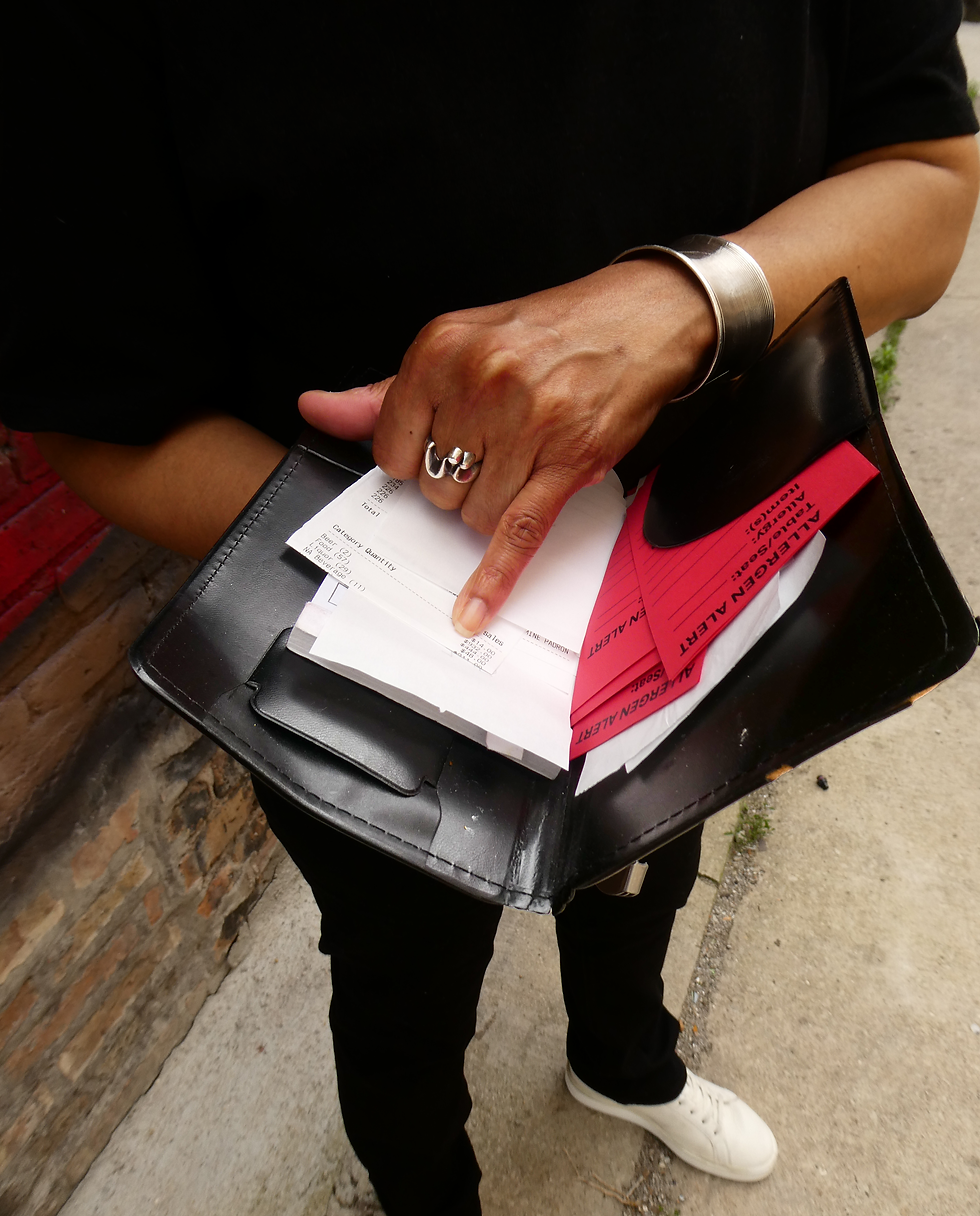
‘Authentic’ Hospitality?
Ultimately, a server is a salesperson, and the goal is money. It’s the part diners don’t want to hear, but it’s true. Bigger checks mean higher tips means bills get paid. Simple. So I asked Yazmine: does a server need to love the menu — or the mission — to be good?
“Hell no,” she said. “But you have to make them believe it.”
For her, Authenticity in service, isn’t about sincerity in the emotional sense. It’s about presence. About staying committed to the world you create in the dining room,“whether you’re in it for checks or because you truly love it,” enveloping yourself in the performance.
A big piece of that performance is understanding the needs of the customer. “I can’t relate to everyone but I can be empathetic,” she noted. For most, dining out is an occasion. People celebrate birthdays, anniversaries, successes, over meals. Some dine out to find solace. Some just want to feel part of a community. A good server must sense which story a table is telling long before dessert.
Yazmine believes service has lost the principle of caring just to care. Hospitality, empathizing with patrons, is a skill undervalued in the modern industry. Trending now is the nonchalant server. You know the one, with monotone speech and an impatient glare. Their coolness seems to trump connection, valuing more the optics of the meal rather than its purpose of creating community. If anything, this type of service is a truer representation of the job. Most of a shift is spent running back and forth from table to kitchen, with a manager asking you to hurry along and that occasional customer asking for sauce on the side and five olives in their martini, stirred, not shaken.
If the server pushed themselves to truly care about every request made of their patrons, they’d be stripped of the little energy that remains after eight-hours on their feet, speaking to strangers. Authenticity, in the strict sense, is virtually impossible. They have to act, to preserve the individuality beneath. “Learning how to relinquish,” said Yazmine, is the key. Relinquishing what you may want—be it your menu preferences or how pace the meal—to satisfy what they may want. This doesn’t mean that care is impossible. With enough care, you will come off as authentic to patrons, whatever authentic means to them.
What Counts: Passion and Attention to Detail

After dinner, we went home. An hour later, I got a text from Yazmine: a photo of the box in her take-home bag, labeled and dated by the bartender. “This is why I love this kind of service,” she wrote. “It's education. I get to learn someone’s passion for someone else’s passion, and pass it on. It becomes circular.”
She was talking about our conversations with the bartender about his knowledge of local liquors, like Apoloque’s Paw Paw liqueur, which he fawned over for its use of the fruit native to the swampy Chicagoland of yesterday. He gave us the name of someone who works at the distillery, located in Chicago’s Pilsen neighborhood. The circle widened. A network of chefs, cooks, hosts, managers, purveyors, and diners, all connected by the person who moves between them: the server.
If authenticity in the strict sense remains slippery, the circulation of passion is real. Servers purvey more than plates — they purvey connection, knowledge, curiosity, and the emotional architecture of a meal.
And that, for Yazmine, is enough reason to pick up her server booklet and head to her next shift.
Writer’s Note: In the first photo, Yasmine is standing in front of a mural painted by Chicago chef Won Kim. She wanted to be photographed amongst the creative products of the city's culinary leaders, and continue to expose me to the vast network of individuals that inspire her work. Because the culinary world isn’t defined by only food. It’s art, it’s place, and, most importantly, it’s people.


